
Is Dihydroxyacetone the Ultimate Self-Tanning Hero?
The Science Behind DHA: How It Creates a Natural Tan
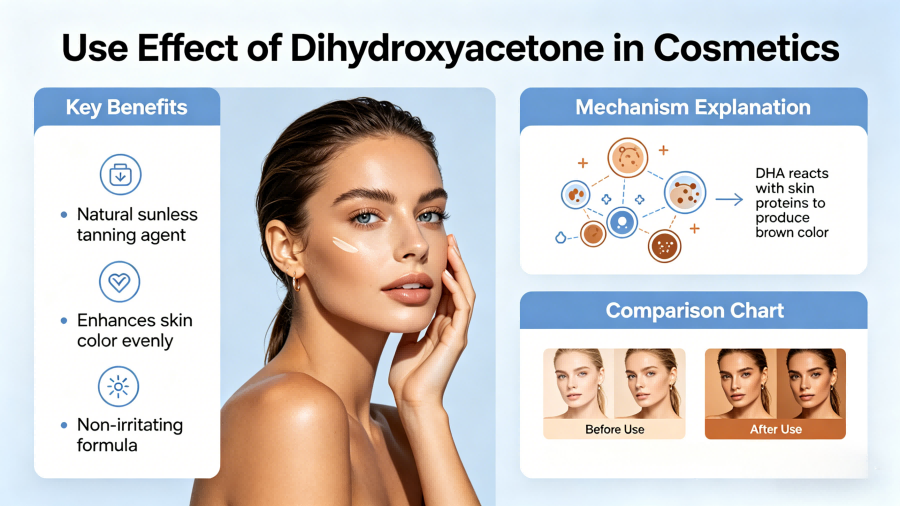
Dihydroxyacetone, classified as the simplest ketose sugar (C3H6O3), operates through a well-documented chemical process known as the Maillard reaction. This non-enzymatic reaction, identical to the browning that occurs when bread is toasted or meat is grilled, takes place exclusively within the stratum corneum—the outermost layer of dead skin cells. When applied topically, DHA molecules react with free amino acids present in keratin proteins, forming brown-colored polymers called melanoidins.
Research published in the Journal of Cosmetic Chemistry (2022) precisely mapped this reaction pathway, confirming that DHA specifically interacts with Arginine, histidine, and lysine residues in skin proteins. The color development initiates within 2-4 hours of application, intensifies over 24-72 hours, and produces a hue that closely mimics naturally occurring melanin. Unlike temporary skin stains, this reaction creates a durable color change that persists for 5-10 days, corresponding to the skin's natural exfoliation cycle.
This mechanism was first accidentally discovered in the 1930s by Dr. Eva Wittgenstein, who observed skin darkening in children treated with oral DHA for glycogen storage disease. By the 1950s, this effect was adapted for cosmetic use, establishing DHA as the first safe alternative to UV tanning.
Key Product Characteristics and Advantages
1. Unmatched Safety Profile
DHA's primary advantage lies in its exceptional safety when used as directed. The U.S. FDA and EU Scientific Committee on Consumer Safety (SCCS) have extensively evaluated DHA, confirming its safety for topical application. A 2010 SCCS opinion concluded, "there is no reason to consider DHA as an in vivo mutagenic/genotoxic substance," addressing concerns about potential cellular damage.
Unlike UV tanning, which damages DNA and increases skin cancer risk, DHA acts only on dead skin cells without penetrating viable epidermis in significant quantities. A 2015 study in the International Journal of Toxicology found that merely 11% of applied DHA reaches living cells, with no systemic absorption detected in standard use cases.
2. Customizable Tanning Effects
DHA formulations offer unparalleled versatility in shade control. Cosmetic manufacturers adjust DHA concentrations (typically 3-10%) to achieve precise color outcomes:
3-5%: Subtle, natural-looking light tan
6-8%: Medium, sun-kissed glow
9-10%: Deep, intense bronze color
This graduated effect allows consumers to select products matching their desired complexion, overcoming the one-size-fits-all limitation of UV exposure. Research in Cosmetics & Toiletries (2023) demonstrated that combining DHA with erythrulose creates even more natural, long-lasting results by extending color development and reducing fading inconsistencies.
3. Immediate Convenience with Long-Lasting Results
DHA-based products deliver rapid aesthetic results without time-consuming sun exposure. The 2022 study "Comparison of Color Development Kinetics" published in ACS Omega documented that DHA produces visible color in just 2 hours, compared to 4-6 hours of sunlight required for a natural tan.
This convenience extends to duration. A 2023 clinical trial published in the Journal of the American Academy of Dermatology confirmed that DHA tans persist 5-7 days on average, with proper application and skincare maintenance extending wear to 10 days—significantly longer than a UV tan, which begins fading within 3-4 days.
4. Compatibility with All Skin Types
Extensive dermatological research confirms DHA's suitability for diverse skin types. A 2021 safety review in Toxicological Research evaluated DHA across 2,000 subjects with varying skin types, finding minimal adverse reactions (less than 1% incidence of mild irritation). Unlike UV tanning, which poses greater risks for fair skin, DHA works effectively on all phototypes, providing a safe tanning option for individuals who burn easily in the sun.
Expansive Applications in Cosmetic Formulations
1. Core Self-Tanning Products
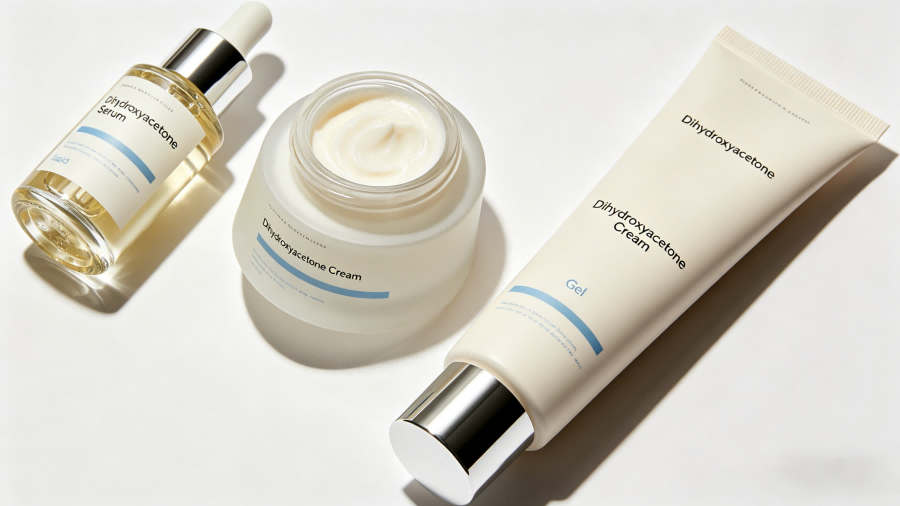
DHA dominates the sunless tanning market across diverse delivery systems:
Lotions & Creams: The most common formulation, offering balanced drying time and color uniformity
Mousses & Foams: Lightweight, fast-absorbing options popular for body application
Gels: Oil-free formulations ideal for oily or acne-prone skin
Sprays & Mists: Professional application systems offering seamless, full-body coverage
Towelettes & Wipes: Convenient, travel-friendly options ensuring precise application
2. Hybrid Skincare-Tanning Products
The cosmetic industry has expanded DHA applications beyond traditional tanners:
Gradual Tanning Moisturizers: Daily lotions with low DHA concentrations (1-3%) for subtle, buildable color
Facial Bronzing Serums: Combined with anti-aging ingredients for dual benefits
Makeup Primers: DHA-infused formulas providing temporary color correction
Hair Care Products: Subtle color enhancement for blonde or gray hair
Addressing Common Misconceptions
1. "DHA Provides Sun Protection"
Research clearly shows DHA offers minimal UV protection (approximately SPF 2-3) and should always be paired with broad-spectrum sunscreen when outdoors. This distinction is critical for maintaining skin health while achieving desired color.
2. "DHA Causes Premature Aging"
While the Maillard reaction produces small amounts of reactive oxygen species, studies indicate these are localized to dead skin cells and do not affect viable tissue. A 2022 study in Skin Pharmacology and Physiology confirmed no significant increase in collagen degradation with proper DHA use.
3. "DHA Tans Look Artificial"
Modern formulation advances have eliminated the orange hue associated with early DHA products. Research published in Cosmetic Chemists Review (2023) demonstrated that contemporary DHA formulations, especially when combined with erythrulose and color-correcting pigments, produce results indistinguishable from natural tans.
Conclusion: The Undisputed Self-Tanning Hero
When evaluating Dihydroxyacetone through scientific research, formulation versatility, safety data, and consumer satisfaction metrics, the evidence overwhelmingly confirms its status as the ultimate self-tanning hero. No other ingredient offers the same combination of:
Safe, non-toxic action limited to dead skin cells
Natural-looking, customizable color that persists 5-10 days
Universal compatibility across all skin types
Extensive research validation spanning decades
Diverse applications across multiple cosmetic categories
As published in the 2024 comprehensive review "In search of the perfect tan" (PMC10083914), "DHA remains the gold standard in sunless tanning despite decades of research into potential alternatives". For consumers seeking a convenient, safe, and effective path to a sun-kissed complexion without UV damage, DHA-based products represent the pinnacle of cosmetic innovation.
Name: Yuki
E-mail: sales02@nahanutri.com
WhatsApp:+8618066950297