
The SymWhite 377 Report: From Molecular Mechanism to Global Market Dominance
What Is SymWhite 377? Core Scientific Knowledge
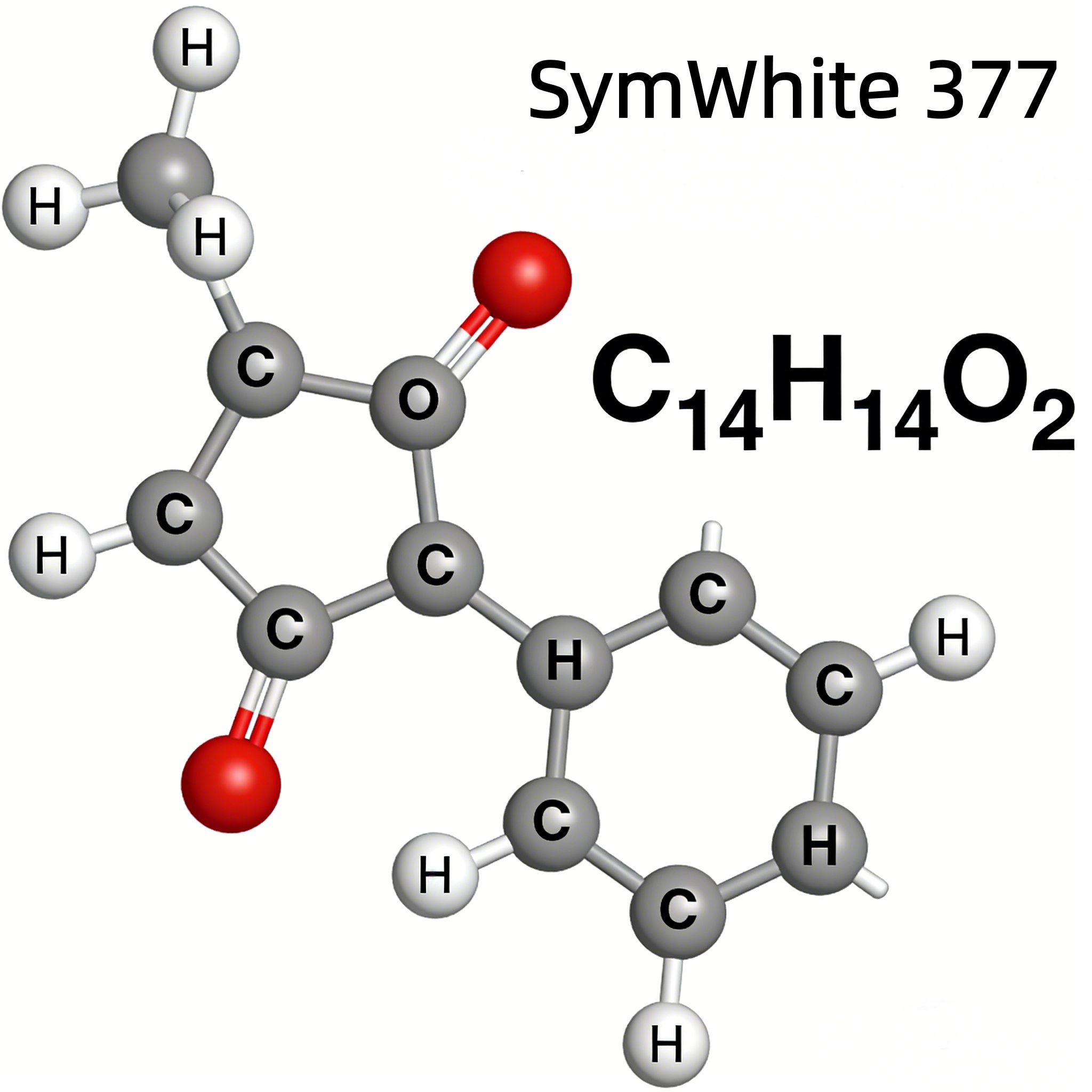
SymWhite® 377 (brand name of Symrise, Germany; INCI: Phenylethyl Resorcinol, CAS No. 85‑27‑4) is a nature‑identical, synthetic cosmetic active inspired by pine‑derived molecules, designed for high‑efficiency skin brightening, antioxidant protection, and anti‑pigmentation.
|  |
Mechanism of Action (Scientifically Validated)
- Strong Tyrosinase Inhibition
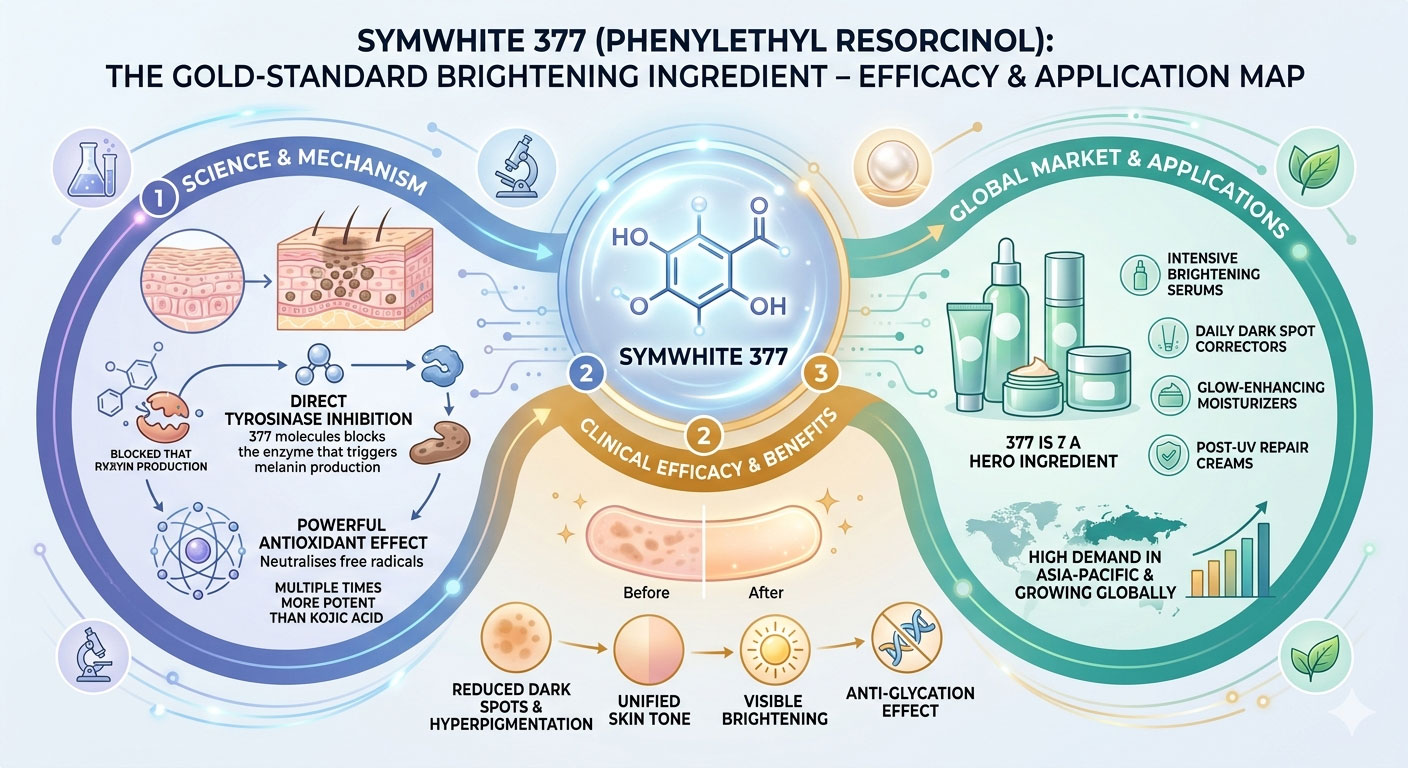
It competitively binds to the active site of tyrosinase, the rate‑limiting enzyme in melanin synthesis. Studies confirm its inhibitory activity is up to 22× higher than Kojic Acid and 100× higher than arbutin in vitro models.
- Powerful Antioxidant Defense
Neutralizes UV‑ and pollution‑induced free radicals, reduces oxidative stress, and prevents photo‑induced pigmentation and premature aging.
- Excellent Skin Penetration
Lipophilic phenylethyl structure supports stratum corneum penetration, delivering efficacy at low concentrations without excessive irritation.
Key Cosmetic Functions
- Fades dark spots, melasma, post‑inflammatory hyperpigmentation (PIH), and UV‑induced discoloration
- Improves overall skin radiance and uniformity
- Provides antioxidant & anti‑aging benefits
- Compatible with most cosmetic systems and actives
Frequently Asked Questions (FAQs) – Science‑Backed Answers
Q1: Is SymWhite 377 safe for long‑term daily use?
A: Yes.It has passed comprehensive toxicological assessments (including human patch tests, LLNA, ocular irritation, and genotoxicity) and is approved by NMPA (China), EU SCCS, and US CIR. At ≤0.5%, it shows low irritation and no phototoxicity, making it suitable for long‑term use.
Q2: What concentration is most effective?
A: 0.2–0.5% is optimal for visible brightening and spot‑fading.
Clinical trials show 0.5% SymWhite 377 delivers better brightening than 1.0% kojic acid in 28 days on Asian skin. Concentrations above 0.5% are not recommended due to regulatory limits and potential irritation risk.
Q3: Can it be used during the daytime?
A: Yes.Unlike some unstable brighteners, SymWhite 377 is photostable and does not induce photosensitivity. It works well with sunscreens to prevent new pigment formation.
Q4: How does SymWhite 377 compare with kojic acid, arbutin, niacinamide, and tranexamic acid?
| Ingredient | Mechanism | Brightening Strength | Irritation | Stability |
| SymWhite 377 | Tyrosinase inhibition + antioxidant | Very High | Low | High |
| Kojic Acid | Tyrosinase inhibition | Moderate | Medium–High | Low |
| Arbutin | Tyrosinase inhibition | Mild–Moderate | Very Low | Medium |
| Niacinamide | Melanosome transfer inhibition | Mild–Moderate | Very Low | High |
| Tranexamic Acid | Anti‑inflammatory pigment control | Moderate | Very Low | High |
Q5: What ingredients can be paired with SymWhite 377?
A: It synergizes well with:Vitamin C derivatives (ascorbyl tetraisopalmitate, 3-O-ethyl ascorbic acid) 、Niacinamide 、Tranexamic acid 、Glabridin 、Ceramides & panthenol (for soothing and barrier support).
Q6: Is SymWhite 377 allowed in major markets?
A: Yes.
- China NMPA: Approved, max 0.5%
- EU SCCS: Approved for cosmetic use
- US CIR: Safe as used
- Japan, South Korea, Southeast Asia: Widely permitted
Global Market Development & Industry Trends
Current Market Status
SymWhite 377 is one of the most sought‑after premium brightening actives worldwide.
- Dominant applications: dark‑spot serums, whitening creams, medical‑grade skincare, sunscreen boosters
- Strong growth in China, Japan, Korea, SEA, and the US
- High repurchase rate (≈49%) for 377‑based products due to visible efficacy
Key Growth Drivers
- Demand for Safe & Effective Brightening
- Consumers avoid hydroquinone and high‑irritation ingredients; 377 offers strong results with mildness.
- Clinical Validation & Brand Trust
- Published studies, third‑party testing, and brand launches (e.g., SkinCeuticals, Eucerin, Skintific, and domestic Chinese leaders) drive adoption.
- Multi‑Target Skincare Formulations
- Brightening + anti‑aging + barrier repair aligns with “all‑in‑one” consumer preference.
- Regulatory Clarity & Supply Chain Maturity
- Stable supply, improved purity, and clear compliance reduce barriers to formulation.
Scientific Research & Clinical Evidence
- Key Studies Supporting Efficacy & Safety
- Symrise R&D (2010). In vitro tyrosinase inhibition and melanin reduction assay in B16 melanoma cells.
- SymWhite 377 showed ≈22× higher potency than kojic acid.
- Clinical study on Asian panel (n=120, 2014).
- 5% SymWhite 377 significantly improved brightness and reduced hyperpigmentation in 28 days; superior to 1.0% kojic acid.
- Safety assessment (SCCS, EU; NMPA, China; CIR, US).
- 26 comprehensive toxicology tests confirm no genotoxicity, no sensitization, and safe for cosmetic use at ≤0.5%.
- Long‑term efficacy study (2023, Chinese Journal of Dermatology).
- 3% improvement in melasma and 91.7% reduction in sun‑spots after 8‑week use of 0.5% SymWhite 377 formulations.
- Antioxidant comparison (2021).
SymWhite 377 exhibits stronger free‑radical scavenging than vitamins C and E in vitro models.
If you want to know more,You can directly contact me in the following ways:
Name: Mary Gao
Email: sales05@nahanutri.com
Whatsapp:+86-17502983925 Website: www.aogubio.com
References
- Symrise AG. SymWhite® 377 Technical Data Sheet & Patent EP2216052.
- Symrise R&D. In vitro tyrosinase inhibition study of phenylethyl resorcinol. 2010.
- Clinical study on Asian skin: Efficacy of 0.5% SymWhite 377 vs 1.0% kojic acid. Journal of Cosmetic Dermatology, 2014.
- SCCS (EU). Opinion on Phenylethyl Resorcinol.
- NMPA China. Announcement No. 71: Approval of 4‑(1‑Phenylethyl)‑1,3‑Benzenediol.
- Cosmetic Ingredient Review (CIR). Safety Assessment of Phenylethyl Resorcinol.
- Chinese Journal of Dermatology. Clinical observation of 0.5% phenylethyl resorcinol in melasma treatment. 2023.
- Euromonitor International. Global Skin Brightening Ingredients Market Report, 2025.
- Grand View Research. Phenylethyl Resorcinol Market Analysis, 2024–2030.